
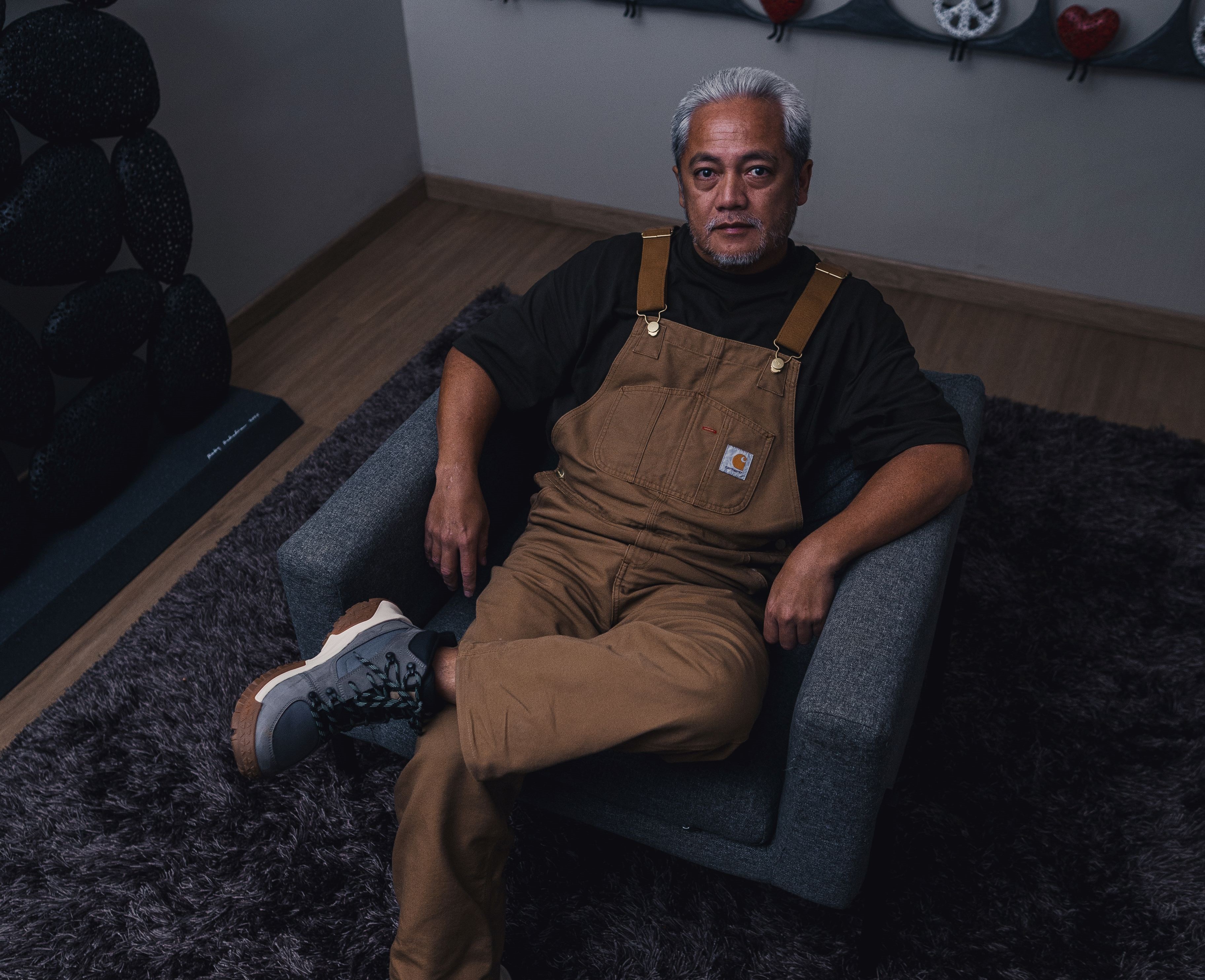
In a contemporary art landscape increasingly defined by digital experimentation and conceptual abstraction, the practice of Redy Rahadian occupies a quieter and more elemental territory. For more than two decades, the Indonesian sculptor has worked at the intersection of engineering and intuition, transforming industrial steel into sculptures of remarkable structural complexity and emotional precision. His work has entered private and institutional collections across Asia and Europe, and has been presented at international auction houses including Christie's and Sotheby's, situating him among the most internationally recognised sculptors of his generation in Southeast Asia.
This text offers a considered introduction to the artist's training, technique, material philosophy, and most significant works to date.
Born on 17 May 1973 in Cianjur, West Java, Rahadian came to sculpture by an unusual route. He trained as a mechanical engineer at the Institut Saint Joseph in Brussels, Belgium, where he developed an intimate technical understanding of metal as both substance and structure. In 1997, he committed fully to artistic practice, carrying the disciplines of engineering, tolerance, load, joinery, structural integrity, into the language of fine art.
That dual inheritance has shaped every aspect of his subsequent work. Where many sculptors approach steel as a material to be subdued, Rahadian treats it as a counterpart in dialogue. His engineering background informs an exceptional structural intelligence; his artistic vision releases the medium from its purely industrial associations. The resulting practice occupies a rare and self-defined territory: technically rigorous, conceptually mature, and unmistakably his own.
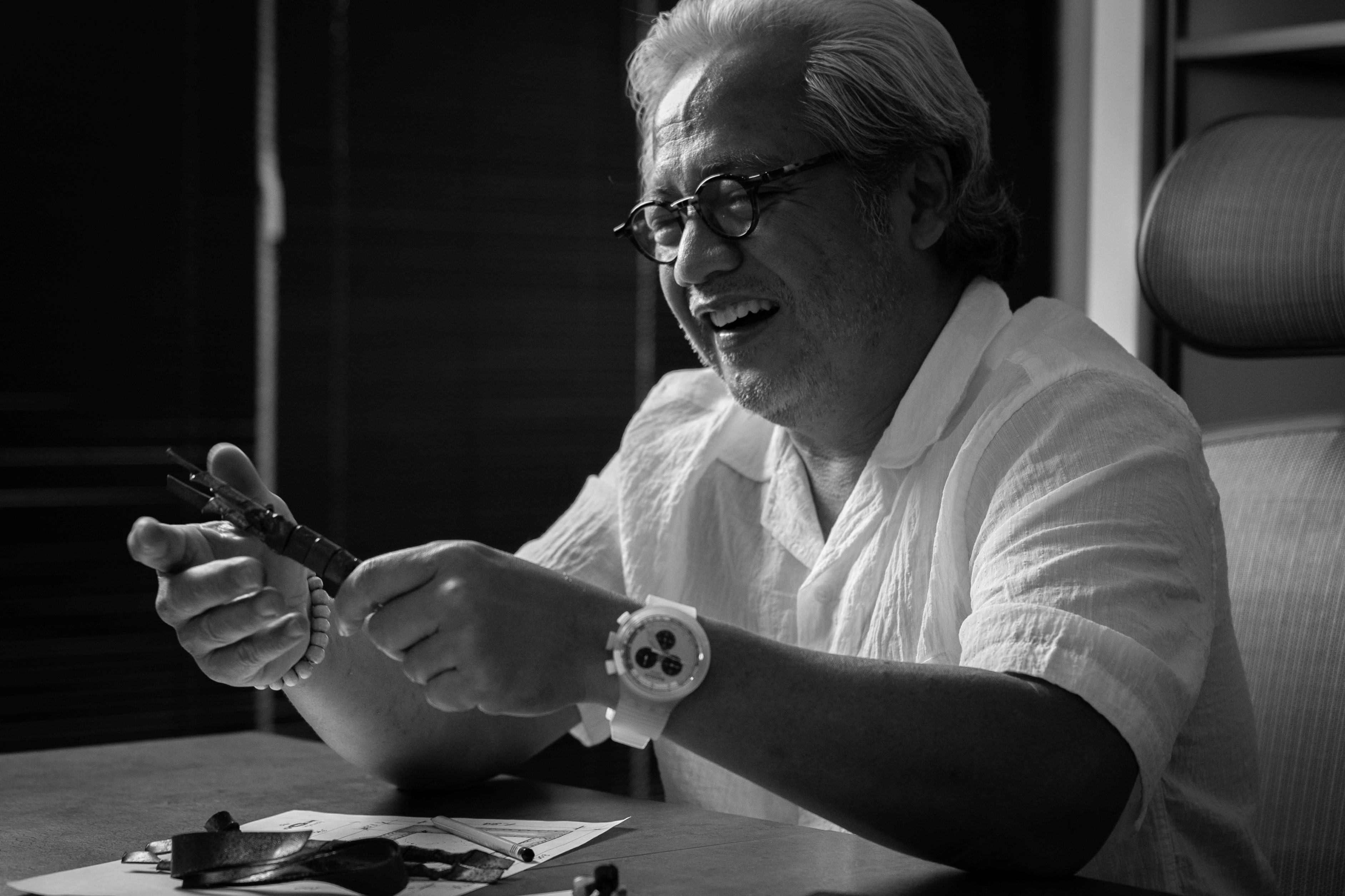
Rahadian's most distinctive contribution to contemporary sculpture lies in his fully handmade, mould-free welding technique. The majority of large-scale metal sculptors rely on moulds, casts, or pre-fabricated armatures to construct their forms. Rahadian does not.
Each work is built free-hand, weld by weld, comprising thousands of individually cut, bent, and joined steel components. There is no template, no prototype, no replicable process. The artist composes directly in three dimensions, allowing form to emerge through the cumulative discipline of countless hands-on decisions.
The approach is uncommon, materially demanding, and entirely irreplicable. It is also the source of the visual language that defines his oeuvre: surfaces alive with rhythm and density, forms that hold both monumentality and granular intimacy, sculptures that bear the literal record of the artist's hand at every joint and seam.
Rahadian works principally in steel, iron, stainless steel, aluminium, and copper. His material selection is never incidental. Each metal carries distinct structural and aesthetic properties, and his process begins with a careful reading of those properties before any form is committed to the studio floor.
This material-led methodology aligns him with the most rigorous traditions of modernist and post-war sculpture, in which the medium is understood not as a passive surface but as an active participant in meaning. In Rahadian's hands, steel is neither softened nor disguised. It retains its weight, its industrial origin, its presence. Yet through assembly, repetition, and refined surface treatment, it becomes capable of unexpected lyricism.
Among Rahadian's most publicly visible works is Terbang Tinggi, a monumental painted steel sculpture measuring 700 × 400 × 120 cm, permanently installed at The Apurva Kempinski Bali. The work rises within the resort's grand interior, suspended in the moment between gravity and ascent, between groundedness and aspiration.
Terbang Tinggi exemplifies the artist's capacity to operate at architectural scale without sacrificing the intimacy of his welding technique. Read from a distance, the sculpture resolves into a singular dynamic gesture. Read at close proximity, it reveals itself as the cumulative work of thousands of hand-formed components. This visual paradox, monumental and granular at once, has become a signature of his mature practice.
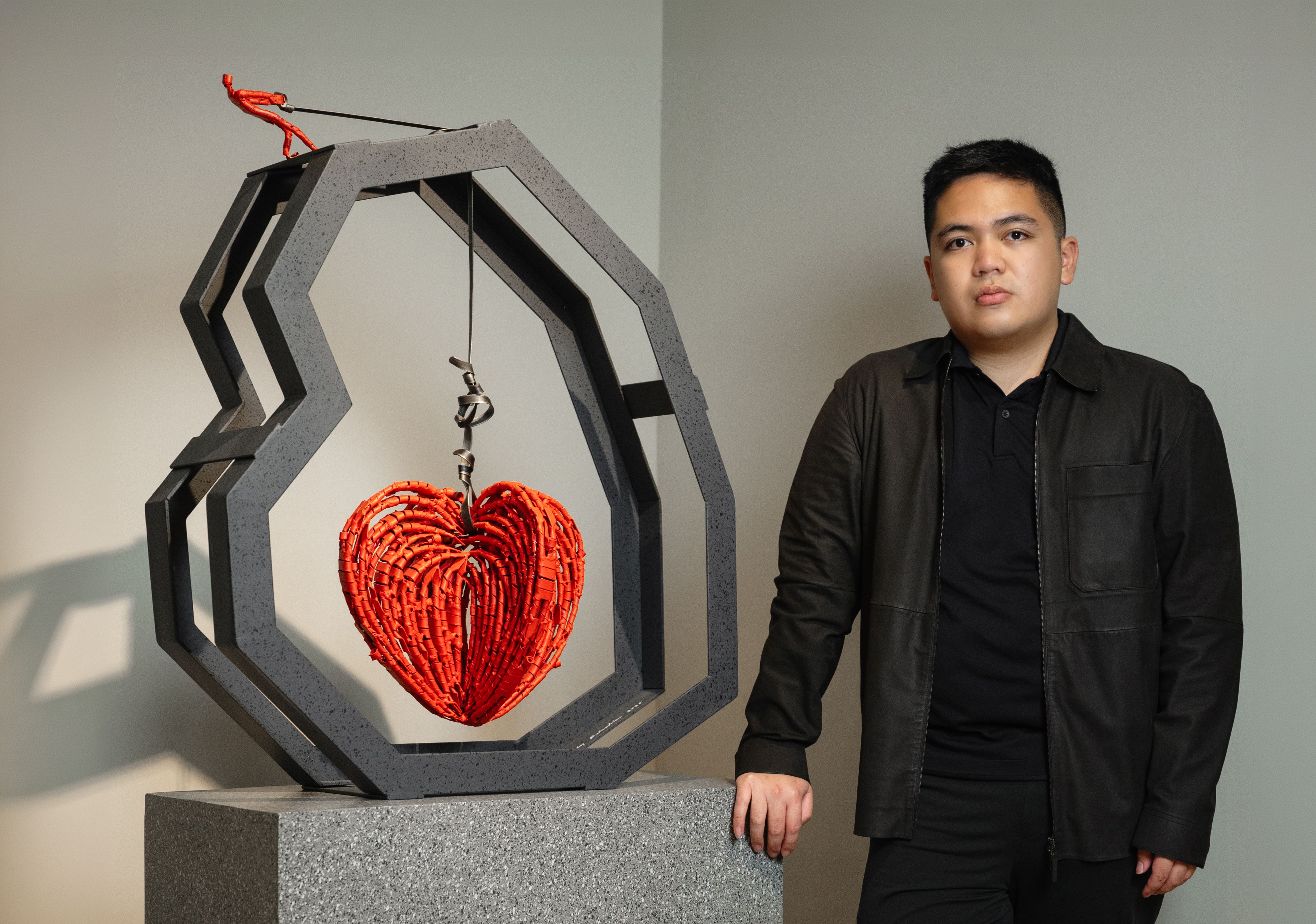
The Dragon Series is among Rahadian's most internationally recognised bodies of work. The series engages directly with one of the most enduring symbols in East Asian visual culture, reinterpreting the dragon through the artist's signature human-figure welding language.
Each sculpture in the series is composed of thousands of individually welded human steel figures, arranged to form the body, limbs, and movement of the dragon itself. The conceptual proposition is unambiguous: that the strength of a singular form is constituted by the union of countless individual souls. The work moves between collective memory and contemporary fabrication, between heritage and innovation, rendered in vivid crimson and, in select pieces, gold.
Key works in the series to date include:
Several works in the series are held in private collections.
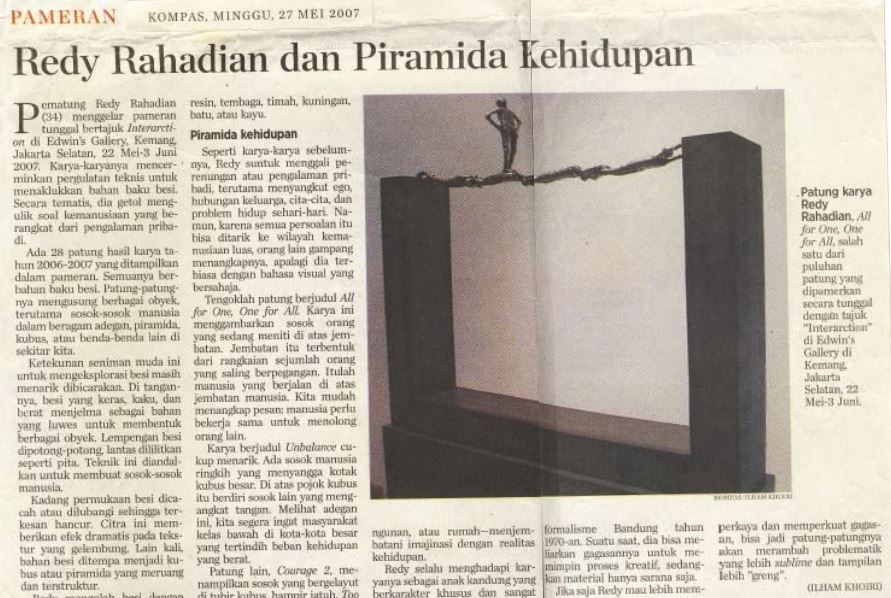
Rahadian's work has been presented at Christie's and Sotheby's, an institutional acknowledgement reached by relatively few Southeast Asian sculptors. His pieces are held in significant private collections in Indonesia and abroad, and his name is increasingly cited among the defining voices of Indonesian contemporary sculpture.
This standing is not the product of marketing alone. It reflects a sustained investment in craftsmanship, in conceptual depth, and in the patient construction of a coherent artistic vocabulary across more than twenty-five years of disciplined practice.
What distinguishes Rahadian within the broader field of Indonesian contemporary art is not simply technical achievement but the seriousness of the underlying enquiry. His sculptures consistently return to a small set of essential questions, on unity and individuality, on heritage and reinvention, on the relationship between the maker's hand and the material's resistance. The work does not announce itself with rhetorical excess. It accumulates meaning slowly, in the manner of objects intended to outlast their moment.
For the viewer, the experience is one of layered recognition. The forms are familiar, the figures human in scale, yet the cumulative effect is unmistakably contemporary, both rooted in tradition and entirely of its time.
Redy Rahadian is represented by Merah Gallery, with locations in Jakarta and Bali.
Merah Gallery Jakarta — Jl. Kemang Selatan VIII No. 2A, Bangka, South Jakarta 12730
Merah Gallery Bali — Jl. Subak Belaki No. 60A, Sukawati, Gianyar 80582
Viewings are arranged by appointment. Enquiries regarding the artist's work, exhibitions, and forthcoming projects may be directed to the gallery.
Email info@merahgallery.com
WhatsApp +62 8111 0100 917
Website www.merahgallery.com

P : +62 8111 0100 917 (Whatsapp)
A : Jl. Kemang Selatan VIII No.2A,
South Jakarta 12730.
A : Jl. Subak Belaki No.60A, Sukawati,
Gianyar, Bali 80582.
H : Monday to Sunday, 10am to 5pm
Download Gallery Profile.png)