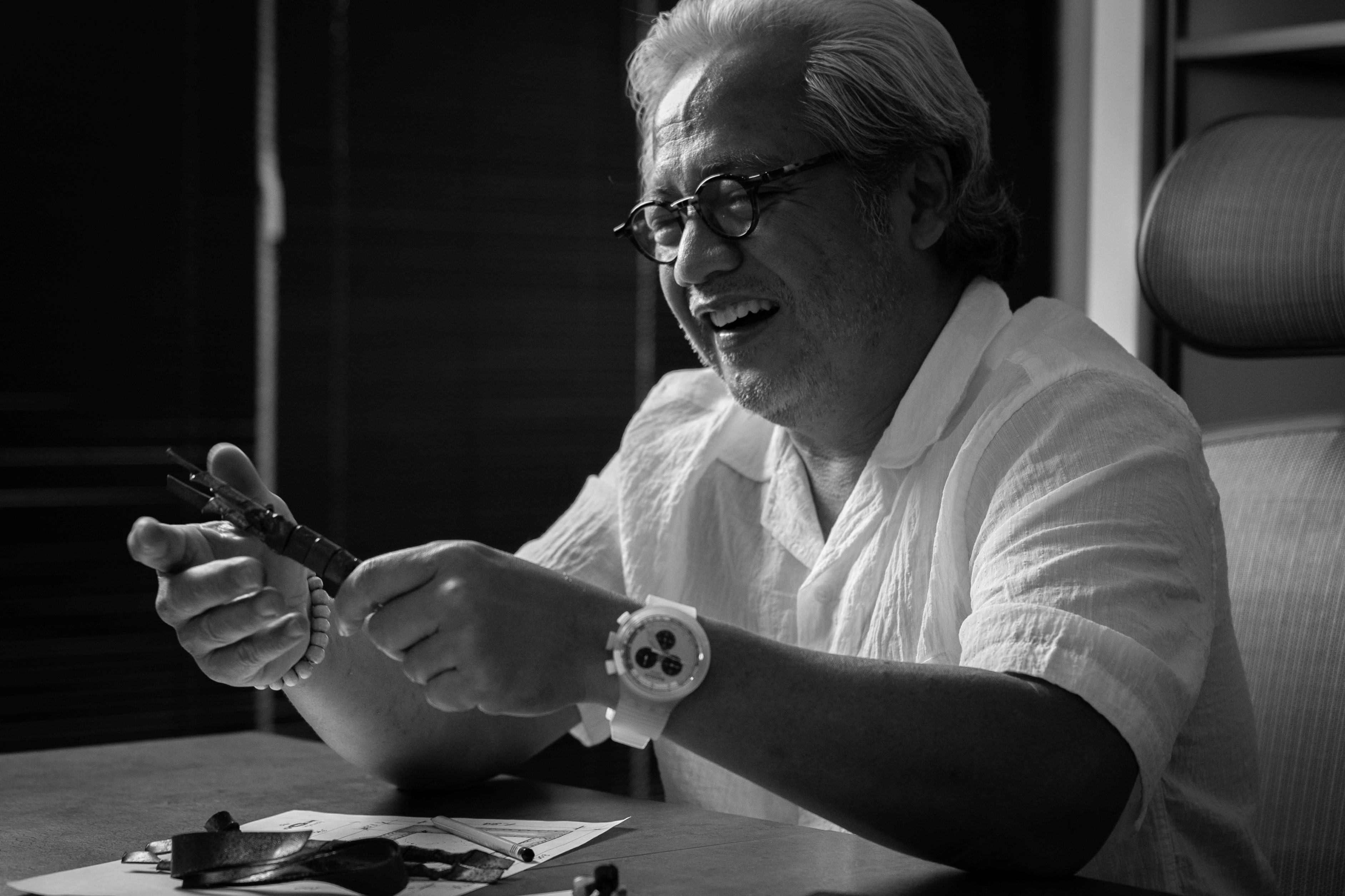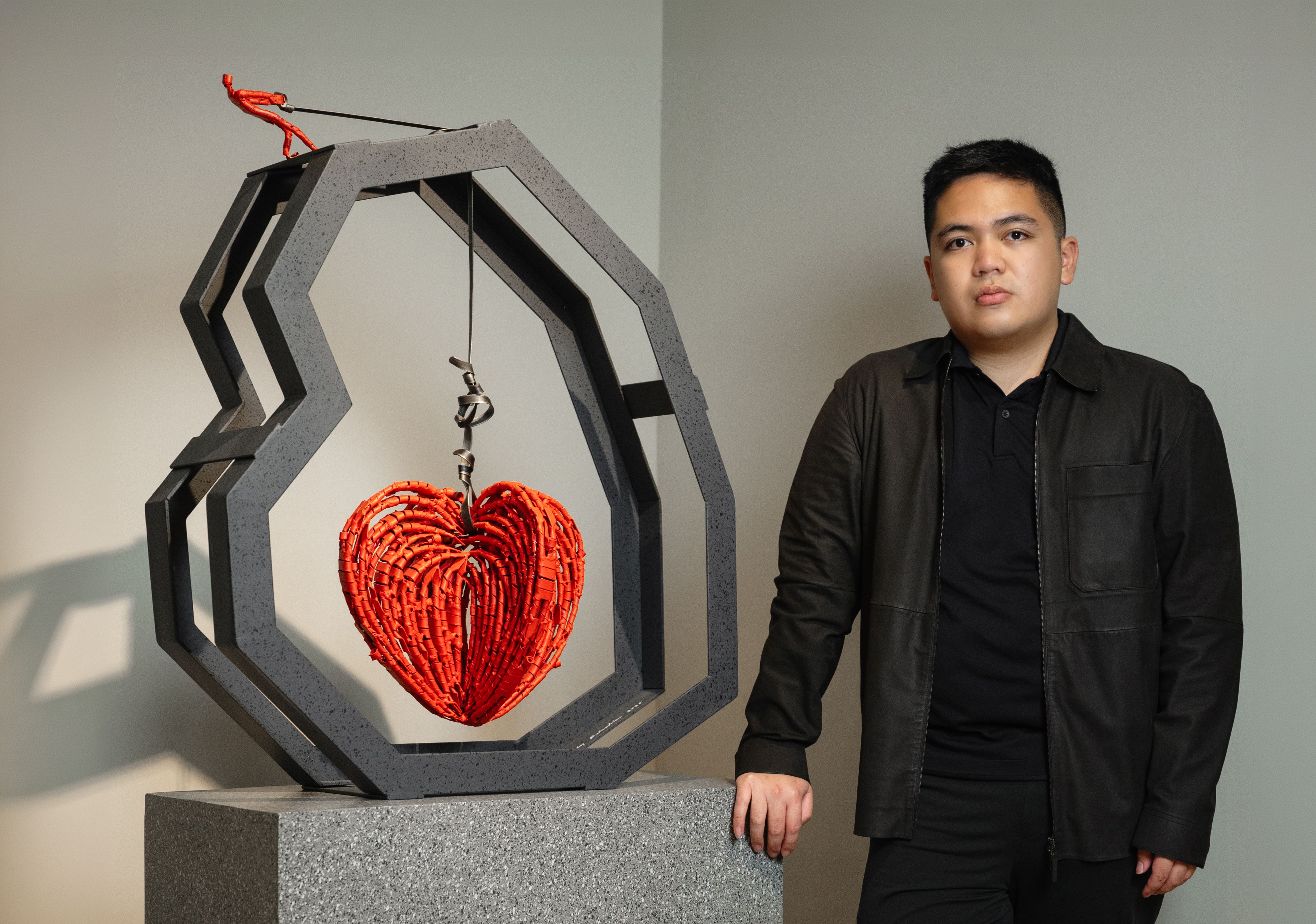
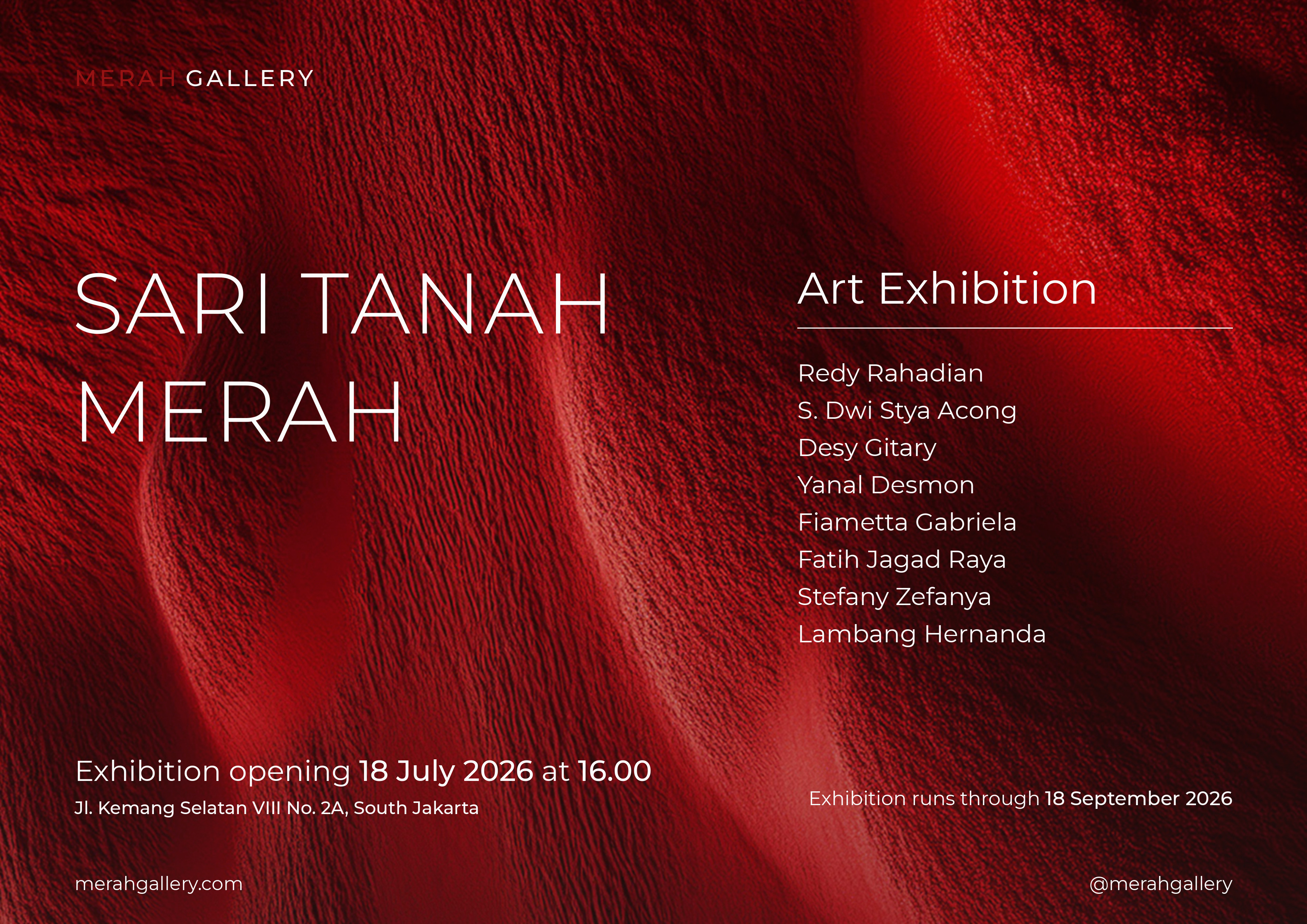
For some people, life is smooth and easy, or so it seems; for others, it is a constant struggle. Redy Rahadian's steel sculptures in Interarction, his second solo exhibition currently on display at Edwin's Gallery in South Jakarta, are about such struggles.
But rather than visualizing this theme in complicated, incomprehensible shapes, the artist unfolds his everyday problems and thoughts in simple images that are easily accessible to the public. His forte lies in bending and molding hard steel to visualize the complexities of life in the simple language of art, in which the personal often touches on the universal.
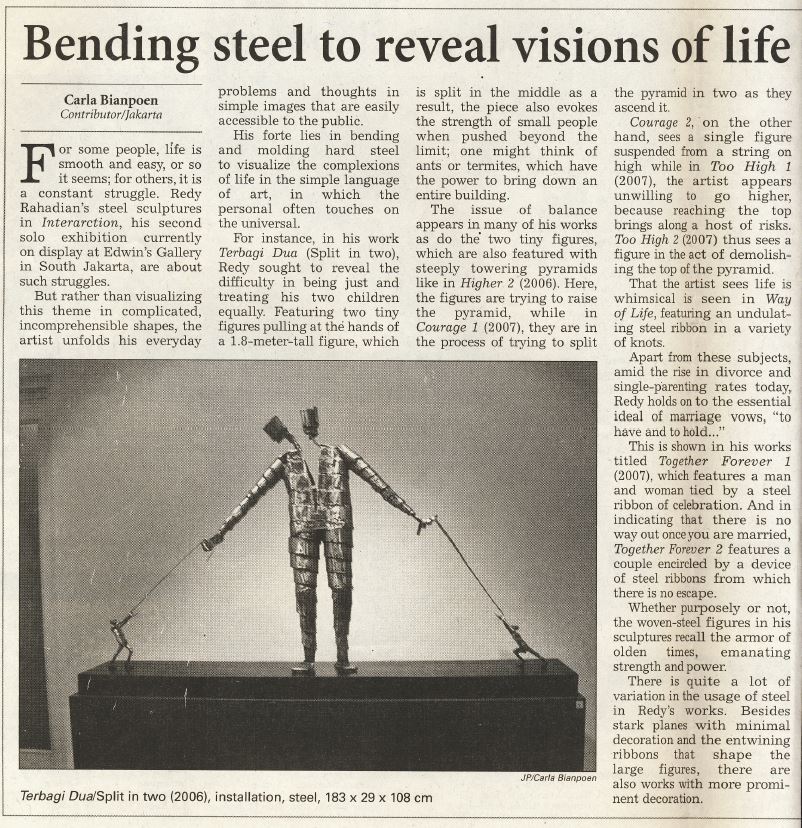
For instance, in his work Terbagi Dua (Split in Two), Redy sought to reveal the difficulty in being just and treating his two children equally. Featuring two tiny figures pulling at the hands of a 1.8-meter-tall figure, which is split in the middle as a result, the piece also evokes the strength of small people when pushed beyond their limits. One might think of ants or termites, which have the power to bring down an entire building.
The issue of balance appears in many of his works. For example, two tiny figures are featured with steeply towering pyramids in Higher 2 (2006), where they are trying to raise the pyramid. Meanwhile, in Courage 1 (2007), the figures are in the process of trying to split the pyramid. Courage 2, on the other hand, sees a single figure suspended from a string on high. In Too High 1 (2007), the artist expresses reluctance to go higher, symbolizing the risks of reaching the top. Too High 2 (2007) depicts a figure in the act of demolishing the top of the pyramid.
That the artist sees life as whimsical is evident in Way of Life, featuring an undulating steel ribbon in a variety of knots. Amid the rise in divorce and single-parenting rates today, Redy holds on to the essential ideal of marriage vows, "to have and to hold." This is shown in Together Forever 1 (2007), which features a man and woman tied by a steel ribbon of celebration. In Together Forever 2, a couple is encircled by a device of steel ribbons, symbolizing that there is no escape once married.
Whether purposely or not, the woven-steel figures in his sculptures recall the armor of olden times, emanating strength and power. There is considerable variation in Redy’s use of steel. Besides stark planes with minimal decoration and entwining ribbons that shape the large figures, some works feature more prominent decorative elements. However, these decorations still hold deeper meaning.
For instance, Next Generation features a shape often depicted as a chakra by other artists. Redy, however, depicts the womb, with the hollow of the circle containing a string and a shape that could resemble a fetus, expressing his personal desire to have more children.
In another series, Redy presents steel figures with parts torn out. In Golden Child 2, the central figure holds an infant in its hand. "Even if the physical body is torn to pieces, the inner soul remains whole," says Redy. This new feature of eviscerating and disemboweling his steel figures is another way the artist keeps his sculptures fascinating.
Redy Rahadian is one of only three artists—alongside Rita Widagdo and Pintor Sirait—to work with steel in the Indonesian sculpture scene. Unlike Rita and Pintor, who often use stainless steel or alloys of stainless steel and aluminum, Redy exclusively uses steel in its hardest form.
A self-taught sculptor, Redy studied auto mechanics at the Institute of Saint Joseph in Brussels, Belgium, where design was part of the curriculum. He became aware of the automobile as a sculpture and was drawn into the field, eventually deciding to become a full-time artist. He utilizes the high-technology welding and torching skills he acquired through auto mechanics in his artistic pursuits.

P : +62 8111 0100 917 (Whatsapp)
A : Jl. Kemang Selatan VIII No.2A,
South Jakarta 12730.
A : Jl. Subak Belaki No.60A, Sukawati,
Gianyar, Bali 80582.
H : Monday to Sunday, 10am to 5pm
Download Gallery Profile.png)